
Loading...
Serving Hemet, CA and surrounding areas. (951) 430-8634
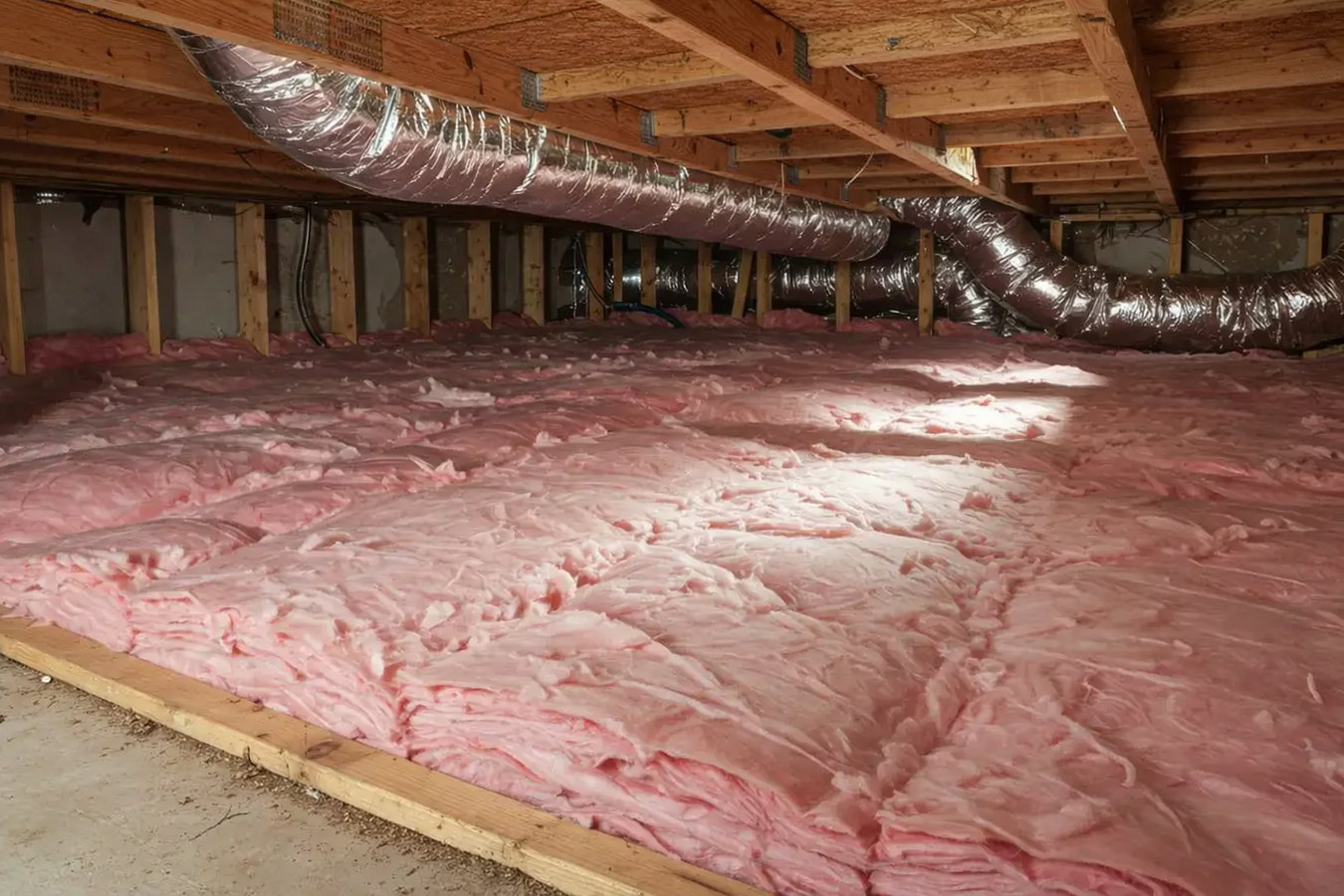
Heat rises through uninsulated floors every summer, and cold sneaks in every winter. Properly insulating the crawl space under your home fixes both problems at once.
Crawl space insulation in Hemet acts as a thermal barrier between the ground underneath your home and your living space above it - most standard single-family jobs are completed in one day, with no need to vacate the property. It slows heat transfer in summer, keeps cold air from pushing through floors in winter, and protects the pipes running through that space from freezing during cold snaps.
Many homes in Hemet's established neighborhoods were built in the 1970s and 1980s and still have their original insulation. That material has had 40 to 50 years to compress, shift, and degrade. If you have never had the crawl space checked, there is a real chance it is either underperforming or missing in sections entirely.
If old or contaminated material is already in place, we typically pair crawl space insulation with our wall insulation service for homeowners looking to address their home's full thermal envelope in one project.
If your kitchen or living room floor feels cold through your socks on winter mornings, the crawl space below is likely under-insulated. Hemet's elevation means winter nights regularly drop into the 30s, and without insulation that cold air moves straight up through your floor. This is one of the most common complaints from homeowners in older Hemet neighborhoods.
Hemet summers bring triple-digit heat from June through September. Without insulation under your floor, that heat transfers directly up into your living space and forces your air conditioner to run longer. If your electric bill climbs higher every summer than it should, the crawl space may be a significant part of the problem.
Condensation on pipes, dark staining on wood, or a musty smell in your home can all point to moisture problems in the crawl space. Hemet's winter rains and ground saturation can push moisture up through an unprotected crawl space floor. Left alone, this leads to mold, wood rot, and insulation that no longer functions.
Rodents and insects love to nest in crawl space insulation. If you have had an exterminator treat the crawl space in recent years, there is a good chance the insulation was compromised in the process. Damaged or pest-soiled insulation should be removed and replaced, not left in place.
We install insulation in crawl spaces two ways: against the underside of your floor joists, or along the interior walls of the crawl space itself. The floor-joist approach is common in older homes where the space is vented. The wall approach - sometimes called encapsulation - is increasingly used in California because it controls moisture more effectively and creates a conditioned buffer zone under your home. We assess your specific crawl space and recommend the method that fits its construction.
Every installation includes sealing air leaks around pipes, wires, and penetrations before the insulation goes in. This step is easy to skip but makes a measurable difference in how the insulation performs over time. For crawl spaces with existing moisture issues, we coordinate with our crawl space vapor barrier service to address the ground moisture before insulating. If your project also includes the walls and attic, our wall insulation team can handle those areas on the same job.
California's Title 24 building energy code sets minimum insulation requirements for floor assemblies in Hemet's climate zone. We install to those standards and document every job, so you have a record of the material and depth used under your home.
Best for vented crawl spaces in older Hemet homes where the floor structure is accessible.
Right for homes with moisture concerns; insulates and seals the entire under-floor environment.
For homes where existing material is damaged, contaminated, or compressed beyond usefulness.
Pairs ground-level moisture control with new insulation for a complete crawl space upgrade.
Hemet sits in the San Jacinto Valley at roughly 1,600 feet, which creates a climate that pushes insulation from both ends. Summers regularly push above 105 degrees, and heat radiates into uninsulated crawl spaces and straight up through floors. Winters bring nights in the low 30s, which is cold enough to freeze pipes in an unprotected crawl space - something that surprises homeowners who moved here from the coast. A well-insulated crawl space protects your pipes and keeps both the summer heat and winter cold out of your living space.
The San Jacinto Fault runs through this region, and even moderate seismic activity can dislodge insulation that was stapled between floor joists. Homes that experienced shaking during past tremors may have gaps in their crawl space insulation that were never repaired. Homeowners in San Jacinto and Banning face the same seismic exposure and we work in both communities regularly.
California's building energy standards - known as Title 24 - apply specifically to Hemet's climate zone and set the minimum R-value required for floor insulation in any permitted renovation. The California Energy Commission publishes those standards. Homeowners in Perris and across Riverside County fall under the same requirements, and we install to those standards on every job.
We ask basic questions about your home's age and what you have noticed - cold floors, high bills, moisture odors. We respond within 1 business day and typically schedule an estimate within the week.
A contractor physically enters your crawl space, assesses what is there, checks for moisture and pest damage, and measures the space. You receive a written estimate that explains what is recommended and why before any work is agreed to.
The crew arrives with materials, removes any old insulation if needed, seals air leaks around pipes and wires, then installs the new material. Most homes in Hemet take four to eight hours depending on crawl space size and condition.
Before leaving, the lead installer walks you through what was done, shows before-and-after photos from inside the crawl space, and confirms the access point is sealed. You can use your home immediately - there is no curing or drying time.
We respond within 1 business day and can usually schedule a free on-site estimate within the week. There is no pressure to move forward after the visit - just an honest look at what is under your home.
(951) 430-8634We install to California's current energy code standards for Hemet's climate zone. That matters when you sell your home or pull a permit for any future renovation - non-compliant work can create complications at both points.
We document what we install on every Riverside County job, with notes on material and coverage under your home. You get a clear record of the work instead of taking anyone's word for what is in the crawl space.
We work in Hemet and the surrounding valley every week and have inspected the crawl spaces of hundreds of homes built during the 1970s and 1980s. That local volume means we recognize problems quickly and do not waste time on a space that looks unfamiliar.
The crawl space is not somewhere most homeowners can easily check themselves. We photograph the space before and after installation so you can see exactly what was done. You should not have to take a contractor's word for it.
Crawl space work happens in a place most homeowners never see, which is exactly why we document it. Every job includes written documentation you can keep on file, and we answer questions about the work plainly without steering you toward work you do not need. Read more about how we work on the about page.
Complete your home's thermal envelope by insulating the walls as well as the floor above your crawl space.
Learn moreA ground-level vapor barrier works alongside insulation to stop moisture from rising up into your floor structure.
Learn moreSummer heat season is approaching - insulating your crawl space now means your AC starts the season working less, not more.