
Loading...
Serving Hemet, CA and surrounding areas. (951) 430-8634
Hemet Insulation is an experienced local insulation contractor serving Corona, CA, with closed-cell foam insulation, blown-in insulation, attic insulation, and crawl space services for homes throughout the city, from neighborhoods near the 91 freeway corridor to hillside properties above Dos Lagos. We have served the Inland Empire since 2022 and respond to all inquiries within 1 business day.
Most Corona homes were built between 1980 and 2005, and that puts a large share of the city's housing stock at the age where original insulation, attic air sealing, and crawl space protection all need a serious look before another summer of 100-degree heat runs up the cooling bill.
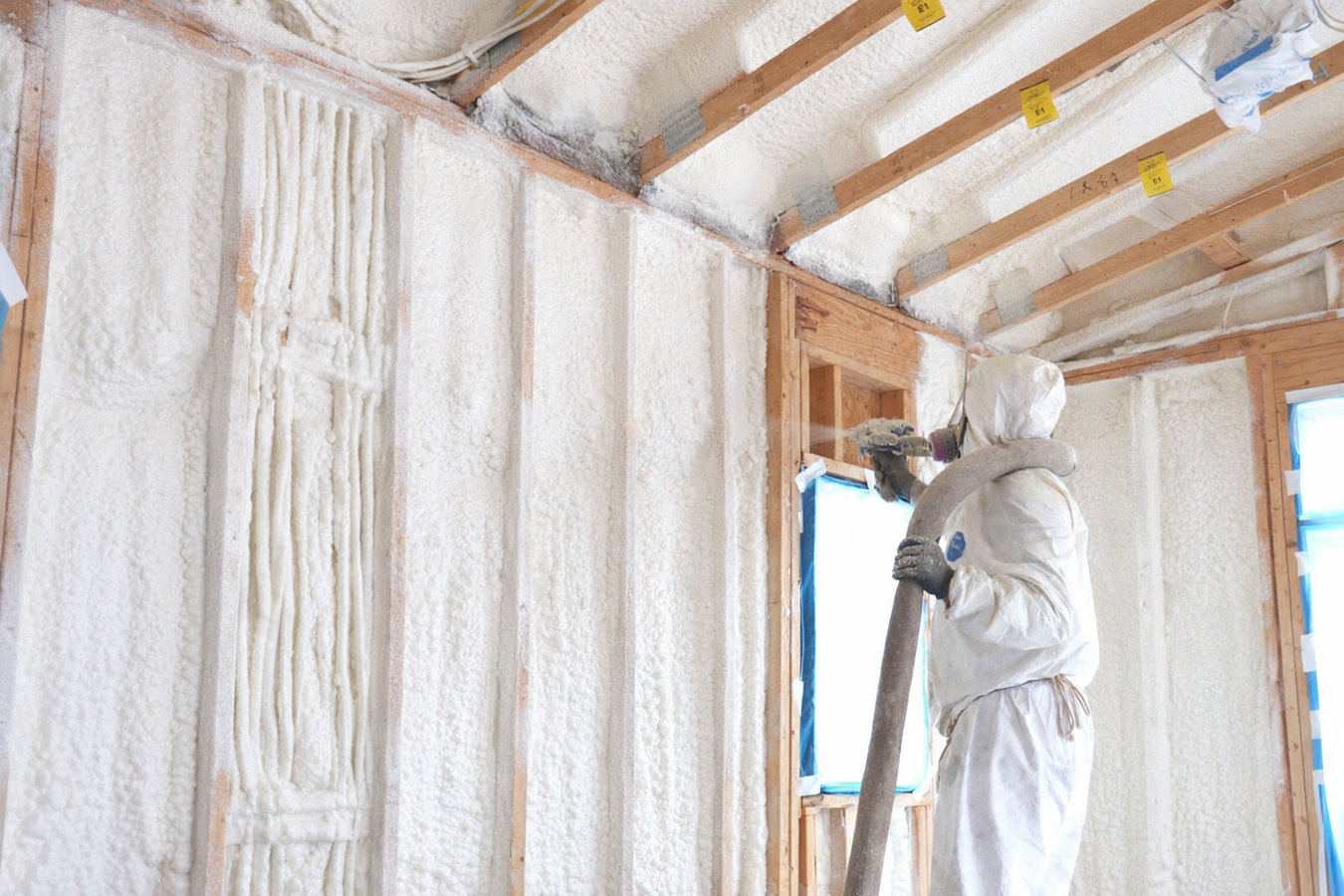
Corona's combination of 100-degree summers, Santa Ana wind events, and clay-soil moisture movement makes closed-cell foam the strongest insulation choice for attic roof decks, crawl space foundation walls, and rim joists. It creates an air-impermeable, moisture-resistant barrier in a single application, which is especially valuable in hillside homes near the Santa Ana Mountains where both wind pressure and ground moisture are more intense than on flat suburban lots. See our closed-cell foam insulation service page for technical specs, R-value by thickness, and application details for the types of homes common in Corona.
The attic is where most Corona homes lose the most energy. Tile roofs on 1980s and 1990s stucco homes hold and radiate heat into the attic space, and attic air temperatures regularly exceed 150 degrees Fahrenheit in summer. Most homes in this city were built with R-19 attic insulation, well below the R-38 that California Title 24 currently requires for Climate Zone 10. After 20 to 40 years of thermal cycling, that original material is performing at a fraction of its rated value. Upgrading attic insulation to current depth is the most impactful single change most Corona homeowners can make to their energy bills.
For Corona homes where the goal is bringing an existing attic up to current R-value without major disruption, blown-in fiberglass or cellulose is the practical choice. It installs through an existing attic hatch in a few hours, covers framing members and irregular surfaces evenly, and reaches consistent depth across the entire attic floor. It is also the most cost-effective way to add a top-off layer over existing compressed batts in homes built in the 1980s and 1990s, and in most standard Corona tract homes the combined air seal plus blown-in approach is a single-day job.
Some Corona homes, particularly those built on sloped lots in the hillside neighborhoods above the 91 freeway corridor, have raised foundation sections with accessible crawl spaces. The clay soils common throughout this area retain moisture after winter rains, and without insulation or a vapor barrier, that moisture migrates into the floor structure above. Crawl space insulation under the floor joists combined with a vapor barrier on the ground surface is the standard treatment, while closed-cell foam on the foundation walls is the upgrade choice for homes where moisture infiltration has been an ongoing problem.
The expansive clay soils under many Corona neighborhoods swell when wet and shrink during dry periods, and that movement drives ground moisture upward into crawl spaces and subfloor framing. A properly installed crawl space vapor barrier stops that migration at the source, keeping wood framing dry through the wet season from December through March. In Corona homes with existing moisture damage or musty odors from the crawl space, vapor barrier installation combined with any necessary insulation work is the most direct path to correcting the problem before it progresses to structural framing.
Corona grew rapidly during the suburban building booms of the 1980s and 1990s, drawing families from Los Angeles and Orange County who wanted more square footage and lower home prices. That concentrated construction timeline means the city now has a large share of homes that are simultaneously hitting the 25-to-40-year mark, the window when roofing underlayment, original insulation, and concrete flatwork most commonly need replacement. Homes built in 1990 are now over three decades old, and the insulation installed to the code minimums of that era is running far below what California Title 24 requires today for Climate Zone 10.
The heat in Corona compounds that degradation faster than in coastal cities. Corona sits east of the Orange County foothills with no marine layer to moderate afternoon temperatures, and summer highs regularly push past 100 degrees Fahrenheit. Attic air temperatures in a stucco home with a dark tile roof can reach 150 to 160 degrees Fahrenheit on the hottest days, and that thermal load accelerates the compression of fiberglass batts, the settling of blown-in material, and the drying and cracking of the foam sealants around attic penetrations. A new insulation job installed to code in 1992 may be performing at R-15 or less today because of that climate reality.
The terrain around Corona introduces a variable that flat Inland Empire cities do not have. The Santa Ana Mountains rise directly to the west, and hillside neighborhoods near Glen Ivy Hot Springs and above the 91 freeway sit on sloped lots with more complex drainage, more intense Santa Ana wind exposure, and in some cases raised foundations or partial basements not found in the flat-lot subdivisions closer to downtown. Contractors who work only in flat suburban environments are sometimes unfamiliar with the moisture patterns and structural geometry that hillside lots create, and those differences affect how crawl space insulation and vapor barrier work need to be scoped.
We have served Corona homeowners since 2022 and coordinate with the City of Corona Building and Safety Department on projects where permit requirements apply. The 91 freeway is the main corridor we use to enter the city from the east, and we are familiar with the full range of neighborhoods on both sides of it: the older flatland subdivisions near downtown Corona and the newer hillside tracts that climb toward the Santa Ana Mountains. The difference in construction and foundation type between those two zones affects the insulation scope, and we account for that difference in every estimate.
Most of the homes we service in Corona are stucco-sided, tile-roofed single-family houses built between 1985 and 2005. We have seen the full range of attic conditions in that era of construction: original R-19 batts that have never been touched, partial blown-in top-offs that left large areas uncovered, and attics where pest activity or a past roof leak contaminated the original material entirely. Knowing what to expect walking into a 1995-built Corona home helps us scope the job accurately before the estimate, and it means we arrive with the right materials rather than making multiple trips.
We also serve Hemet, which is our home city and the base of our operation. Hemet homeowners dealing with the same Inland Empire heat and aging housing stock conditions that Corona residents face are our most familiar customers, and the knowledge transfers directly. Homeowners in either city with questions about insulation upgrades are welcome to reach out for a free on-site estimate with no obligation.
Call or submit your information through our contact form and we respond within 1 business day. We ask about your home's age, size, and what is prompting the call, whether that is high energy bills, uneven room temperatures, or a specific area you want assessed.
A technician visits your Corona home, goes into the attic, measures the existing insulation depth and type, checks air sealing conditions, and inspects any crawl space areas relevant to your concerns. The estimate is written and itemized so you know exactly what is included before any work is scheduled, and there is no charge or commitment required.
On the scheduled work day, we seal attic penetrations first with spray foam and caulk, then install blown-in or spray foam insulation to the target R-value. Spray foam applications require the homeowner to be out of the application area for 2 to 4 hours while the product cures; blown-in work has no reentry restriction. The crew handles all equipment and material staging.
We confirm installed depth with a depth gauge, clean up all equipment, debris, and any material tracked through the access path, and walk the homeowner through what was done. Any questions about warranty, ongoing maintenance, or next steps for additional areas of the home are answered before we leave.
We serve all of Corona, CA and respond within 1 business day. No obligation, no high-pressure sales.
(951) 430-8634Corona is a city of around 170,000 people in western Riverside County, positioned just off the 91 freeway on the border between Riverside and Orange counties. Its location made it an attractive destination for families priced out of Orange County during the 1980s and 1990s building booms, and the result is a city with a dense concentration of owner-occupied single-family homes built across roughly two decades. Median home values have climbed to around $600,000, reflecting the strong demand from homeowners who commute to Anaheim, Irvine, and Los Angeles. Well-known community landmarks include the shopping and dining area near Dos Lagos in south Corona and Glen Ivy Hot Springs at the base of the Santa Ana Mountains, which has been a local destination for over a century.
The housing stock is almost entirely single-family detached homes with stucco exteriors, tile roofs, attached two-car garages, and lots typically ranging from 6,000 to 10,000 square feet. A large share of the city's homes are now 25 to 40 years old, putting them squarely in the range where major systems need attention. Many owners here are long-term residents who have significant equity in their properties and make decisions based on the quality of the work, not just the lowest price. That matches well with the way we approach insulation work: a thorough assessment first, then a recommendation built around what the home actually needs.
We serve Corona as part of our broader Western Riverside County coverage. Neighboring Riverside to the east shares many of the same housing characteristics, while Murrieta to the south is another city with a similar profile of 1990s-to-2000s tract homes due for insulation upgrades. Homeowners with questions about insulation in any of these areas are welcome to call or submit a request and we will schedule a free on-site estimate.
Spray foam seals gaps and delivers a high R-value in attics, walls, and crawl spaces.
Learn moreProper attic insulation reduces heat gain and keeps energy bills in check year-round.
Learn moreBlown-in insulation fills irregular cavities evenly for consistent thermal coverage.
Learn moreWhole-home insulation services that improve comfort and lower heating and cooling costs.
Learn moreSafe removal of old, damaged, or contaminated insulation before a fresh installation.
Learn moreInsulating the crawl space reduces moisture intrusion and improves floor comfort.
Learn moreWall insulation cuts noise transmission and stabilizes interior temperatures.
Learn moreAir sealing stops drafts at penetrations and joints, improving HVAC efficiency.
Learn moreBasement insulation controls moisture and keeps below-grade spaces usable.
Learn moreClosed-cell foam provides the highest R-value per inch and acts as a vapor barrier.
Learn moreOpen-cell foam expands to fill cavities and provides excellent sound dampening.
Learn moreSealing attic bypasses before insulating dramatically reduces conditioned air loss.
Learn moreA vapor barrier in the crawl space protects structural wood and subfloor materials.
Learn moreProfessional vapor barrier installation keeps ground moisture out of living areas.
Learn moreRetrofit insulation upgrades existing homes without requiring major demolition.
Learn moreCommercial insulation solutions for offices, warehouses, and light industrial buildings.
Learn moreServing these cities and communities.
We schedule free on-site estimates across all of Corona, CA. Call or submit a request and we respond within 1 business day.