
Loading...
Serving Hemet, CA and surrounding areas. (951) 430-8634
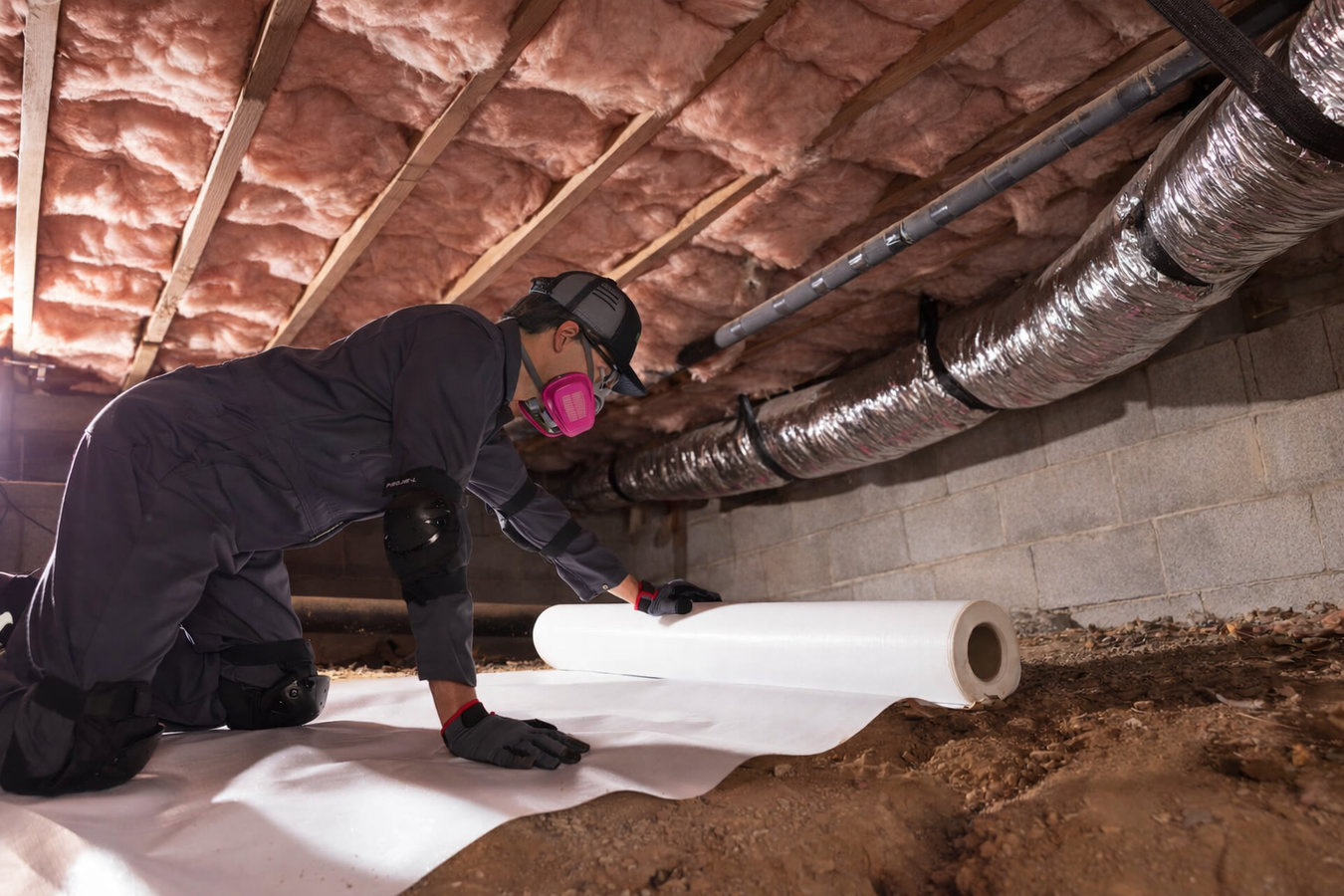
Ground moisture quietly rots floor joists, degrades insulation, and causes the musty smell in older Hemet homes. A properly installed vapor barrier stops it before the damage compounds. Written estimate, experienced crew, most jobs done in one day.
Vapor barrier installation in Hemet covers the exposed ground and walls of your crawl space with heavy-gauge plastic sheeting to block soil moisture from entering your home's floor structure - most jobs on a standard home are completed in one full day without disrupting your living areas.
Moisture from the soil beneath your home does not disappear during Hemet's dry summers. It sits in the clay-heavy ground and migrates upward year-round, with the heaviest pressure coming from November through March when Hemet's wet season saturates the soil. Without a barrier between the soil and your floor framing, that moisture feeds mold, softens wood, degrades insulation, and produces the musty smell that many Hemet homeowners have come to assume is unavoidable. Vapor barrier installation stops that process before it reaches your living space.
For homes where the crawl space insulation is also degraded, we often combine the vapor barrier with a full insulation replacement in a single visit. See our retrofit insulation page for information on bundled projects. The U.S. Department of Energy publishes guidance on crawl space moisture control at energy.gov.
Wood floor joists and subfloor panels that have absorbed moisture over time start to soften and lose rigidity. If a spot in your hallway or kitchen feels slightly bouncy or gives a little when you walk on it, that is often moisture damage working from below. In Hemet homes from the 1970s and 1980s, this kind of damage is common in houses that have never had a vapor barrier installed or replaced.
A damp, earthy smell that shows up after Hemet's winter rains, or that never fully goes away, is one of the clearest signs that moisture is getting under your home. That smell is typically mold or mildew growing on wood or insulation in the crawl space. If you notice it most strongly near floor vents or in rooms over the crawl space, the area underneath needs attention.
If you have looked into your crawl space and seen wet ground, puddles, or soil that looks dark and saturated, your crawl space is taking on water. Hemet's rainy season can push significant moisture under homes, especially those on streets with limited drainage. Even if the water dries between storms, repeated wetting and drying causes real structural damage over time.
When moisture gets into crawl space insulation, it stops working effectively, forcing your heating and cooling system to work harder. If your bills have been creeping up and you have not changed your habits or appliances, deteriorating insulation from moisture exposure could be part of the reason. This is especially worth checking in older Hemet homes that have never had the crawl space inspected.
For homes with no existing protection, we perform a full new installation: the entire crawl space floor is covered with heavy-gauge polyethylene sheeting, every seam is overlapped and taped so no bare soil is exposed, and the edges are secured up the foundation walls. This is the starting point for any Hemet home that has never had a proper barrier or whose original thin plastic has reached the end of its useful life.
Barrier replacement is the most common request we receive from homeowners in Hemet's older neighborhoods. The thin sheeting installed during the 1960s through 1980s construction era has had decades to become brittle, tear, and separate from the walls. Seasonal soil movement in the San Jacinto Valley accelerates that deterioration. We remove the old material, clear debris, and install material rated for current conditions. For an even more complete solution, we also offer crawl space vapor barrier service that focuses specifically on the ground cover component for homeowners who want that scope separated out clearly.
When moisture levels are severe or when the crawl space has experienced pest damage or standing water, full encapsulation may be the appropriate approach. That adds sealed walls, sometimes a sealed ceiling, and a dehumidifier to the scope. We will tell you honestly during the inspection which level of protection your home actually needs rather than defaulting to the higher-cost option.
For homes with no existing vapor barrier or bare soil in the crawl space, covering the entire ground surface with properly overlapped and taped heavy-gauge sheeting.
For homes where the original thin plastic from the 1970s or 1980s has degraded, torn, or been displaced by soil movement, pests, or prior plumbing work.
For homes with severe moisture, the walls and sometimes the ceiling of the space are also sealed, and a dehumidifier is added to actively control humidity year-round.
Hemet's semi-arid climate creates a common misconception among homeowners: the dry summer heat makes moisture feel like someone else's problem. In reality, the clay-heavy soils throughout the San Jacinto Valley hold water from the wet season and release moisture upward through capillary action all year long. Even during the driest months, the ground beneath your home is actively pushing moisture into unprotected crawl spaces. By the time you notice a musty smell or a soft floor, the damage has typically been building for several wet seasons. Homes near lower-lying streets or areas with limited drainage face additional risk when Hemet's occasional heavy winter storms send water moving quickly through the valley.
A significant portion of Hemet's housing stock was built between the 1960s and 1980s, before California's current building energy and moisture standards required effective crawl space protection. Many of those homes have never had their original thin vapor barrier inspected, replaced, or upgraded. If your home was built before 1990 and has never had the crawl space addressed, the probability of finding degraded or missing moisture protection is high. California's building energy standards for renovation and addition work, published by the California Energy Commission, apply when insulation work is done alongside a vapor barrier project.
We serve homeowners throughout the San Jacinto Valley and surrounding communities, including Banning, Beaumont, and Moreno Valley. The soil conditions, housing age, and seasonal moisture patterns in those areas are similar to Hemet, and the same installation standards apply.
We reply within one business day. We will ask the age of your home, whether you have noticed any moisture or odor issues, and whether you know if a vapor barrier is already in place. That context helps us arrive prepared and give you a realistic estimate before the inspection.
We access your crawl space through the hatch or exterior vent opening and inspect the condition of the ground, any existing barrier, the wood framing, and the foundation walls. We walk you through what we find and provide a written estimate before any work begins.
The crew enters the crawl space, removes any old or damaged material, and cleans out debris before rolling out and sealing the new plastic sheeting. Every seam is overlapped several inches and sealed with tape. The material runs up the foundation walls and is fastened in place. Most Hemet homes are done in one full day.
Before leaving, we walk you through the completed work with photos of the crawl space and explain what to watch for in the coming weeks. Most homeowners notice musty smells fading within a few weeks, with the biggest improvement showing up after the first rainy season.
Written quote, experienced contractor, no obligation. We reply within one business day.
(951) 430-8634We give you a written estimate for every job we take on in Hemet, with materials and labor itemized. The number you approve is the number you pay, so you can compare our scope against anyone else before signing anything.
We have worked in crawl spaces throughout Hemet and the surrounding valley, including in older neighborhoods built in the 1970s and 1980s where vapor barrier problems are most common. We know the clay soils, the seasonal moisture patterns, and the specific failure modes that show up in homes built during that construction era.
We install barrier material rated for the seasonal soil movement and the wet-dry cycle in the San Jacinto Valley. Thin, low-cost sheeting tears within a few years under these conditions. The material we use is thick enough to hold up to foot traffic during future inspections and resists the punctures that cheap barriers are prone to.
Every project begins with a written estimate that itemizes materials, labor, and any prep work needed. Nothing is added to the final invoice that was not in the estimate you signed. You know the complete cost before we do a minute of work under your home.
Every homeowner should ask for a written estimate and references before hiring anyone for crawl space work. That paperwork tells you the full scope and price upfront, and it is one of the most important things you can do before a contractor touches your home.
Update the insulation in your existing Hemet home without major demolition, often paired with a vapor barrier installation for a complete moisture and thermal upgrade.
Learn moreFocused crawl space ground cover installation for homes that need the soil sealed without a full encapsulation project.
Learn moreA free inspection takes less than an hour and tells you exactly what your crawl space needs. Call now or submit a request online and we will get back to you within one business day.